IDT Vision Vision tech, decoded for UK trade buyers

IDT Vision

Vision tech, decoded for UK trade buyers

Latest Articles

The Cable Run Outlives the Camera: A Ten-Winter Standard for UK External CCTV
Surveillance & CCTV

The Cable Run Outlives the Camera: A Ten-Winter Standard for UK External CCTV

External cameras are replaced far more often than the cable routes that serve them. This installation standard sets out how UK trade buyers should specify drip loops, UV-rated fixings, conduit movement and service access so that a water-ingress fault does not appear three winters after handover.

Second-User, First-Rate? A Due-Diligence Checklist for Refurbished CCTV Hardware in the UK
Procurement & Lifecycle

Second-User, First-Rate? A Due-Diligence Checklist for Refurbished CCTV Hardware in the UK

Refurbished CCTV hardware can protect margin or create an unpatched liability. This procurement checklist covers firmware provenance, licence transfer, PoE compatibility, warranty reality and the risks of a mixed OEM estate.

Data Protection & Compliance

Safeguarding by Field of View: A Room-by-Room CCTV Method for UK Schools and Care Settings

Sensitive UK environments need more than a generic school CCTV template. This guide gives trade buyers a room-by-room method for balancing safeguarding duties with data minimisation, covering field of view, masking, audio, retention and the DPIA.

Every Camera Accounted For: A Health-Telemetry Clause Set for UK Surveillance Estates
Surveillance & CCTV

Every Camera Accounted For: A Health-Telemetry Clause Set for UK Surveillance Estates

A UK camera estate can prove it is recording without proving that each device is healthy, correctly aimed and contributing usable video. This article sets out a practical telemetry clause set for trade buyers, covering heartbeat monitoring, tamper and blur detection, storage and PoE health, ONVIF event traps, escalation and service-credit evidence.

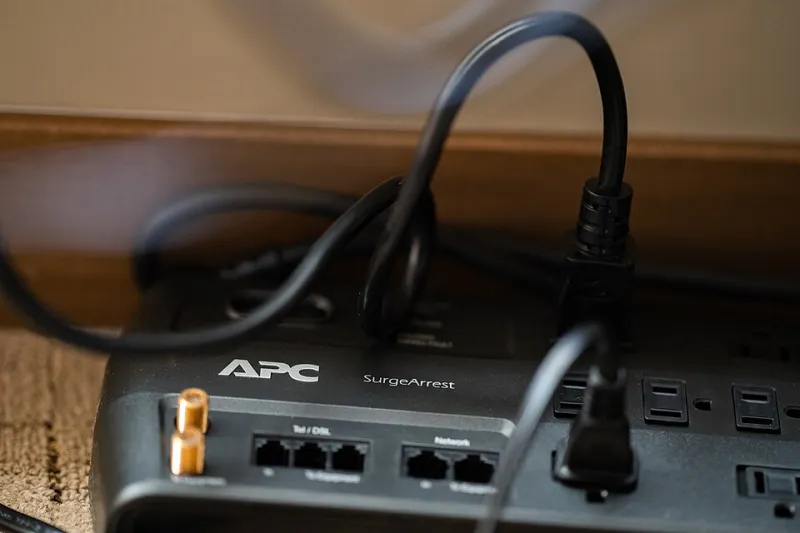
Bonded, Not Bolted: A Surge-Protection Framework for UK Camera Estates
Surveillance & CCTV

Bonded, Not Bolted: A Surge-Protection Framework for UK Camera Estates

Storm-related CCTV failures are rarely bad luck; they are usually a coordination gap between surge devices, earthing and bonding. This article sets out a practical framework for specifying, installing and proving surge protection across UK camera estates.

Surveillance & CCTV

Seconds Before the Generator: A Load-First Method for Power Continuity on UK Camera Estates

Backup power for a CCTV estate is usually specified from a catalogue rather than from the site's actual behaviour. This guide sets out a load-first method: define the safe state, measure real demand, account for battery ageing and generator transfer windows, then commission the system so the proof exists before the storm season arrives.

The Software Line on the BOM: A Five-Year Licence Audit for UK Camera Estates
Surveillance & CCTV

The Software Line on the BOM: A Five-Year Licence Audit for UK Camera Estates

Video management and analytics licences are rarely priced on a single, comparable basis. This audit sets out the four common charging models, a worked sixty-camera example over five years, and the quotation questions that keep the software line honest after handover.

When the Light Lies: Flicker, Drivers and the Frames Your ANPR Camera Never Sees
Surveillance & CCTV

When the Light Lies: Flicker, Drivers and the Frames Your ANPR Camera Never Sees

A lit forecourt can look perfectly steady to the eye while a camera running a short exposure records banding, strobing and unreadable plates. The cause usually sits in the luminaire driver, not the camera, and it is measurable at specification stage. This article sets out what to ask lighting suppliers and how to prove the result before handover.

Heat Above the Parapet: A Thermal Specification for Roof-Mounted CCTV and ANPR
Surveillance & CCTV

Heat Above the Parapet: A Thermal Specification for Roof-Mounted CCTV and ANPR

An IP66 enclosure keeps rain out, but it does not keep heat in check. On UK roofs, solar gain, low airflow and PoE load can push cameras into throttling and image noise long before the hardware fails outright. This guide sets out a thermal specification and commissioning routine for trade buyers.

The Microphone Is a Legal Instrument: Specifying Two-Way Audio on UK CCTV Estates
Surveillance & CCTV

The Microphone Is a Legal Instrument: Specifying Two-Way Audio on UK CCTV Estates

Two-way audio now ships as standard on a great many IP cameras and door stations, yet on a UK site it quietly converts a visual surveillance system into a system that records conversations. This specification checklist covers microphone directionality, noise gating, speaker placement, signage, retention and the boundary between public, staff and neighbouring space.

Blurred Frames, Unbroken Chain: A Redaction Workflow for CCTV Subject Access Requests
Surveillance & CCTV

Blurred Frames, Unbroken Chain: A Redaction Workflow for CCTV Subject Access Requests

UK CCTV operators must answer subject access requests without exposing bystanders. This 2026 workflow covers intake triage, retention checks, separated review, audit trails and supplier checkpoints for trade buyers.

Paper Brightness, Street Legibility: Outdoor Display Specification for UK Sites
Digital Signage

Paper Brightness, Street Legibility: Outdoor Display Specification for UK Sites

Outdoor display procurement often reduces to a headline nits figure, yet UK trade buyers need sustained brightness, contrast, thermal behaviour and service access to judge real-world legibility. This guide sets out how to specify forecourt, high street and transport hub displays without paying for unusable brightness or underestimating maintenance.

Seconds That Stand Up: Building a Time-Accuracy Regime for UK Surveillance Estates
Surveillance & CCTV

Seconds That Stand Up: Building a Time-Accuracy Regime for UK Surveillance Estates

Timestamp accuracy is rarely treated as a system requirement, yet it underpins evidential integrity, incident reconstruction and UK GDPR accountability. This article sets out a practical time-accuracy regime for cameras, NVRs and access-control systems, from NTP architecture and daylight-saving pitfalls to drift monitoring and handover checks for 2026.

The Three O'Clock Problem: WDR and Glare Control at UK Retail Entrances
Surveillance & CCTV

The Three O'Clock Problem: WDR and Glare Control at UK Retail Entrances

Low winter sun and wet tarmac can make an otherwise well-specified entrance camera unusable for several hours a day. This trade guide sets out how to compare true wide dynamic range, reproduce glare on site and specify housings and exposure settings that hold up in UK retail conditions.

Hard Shell, Soft Centre: Vandal Resistance Beyond the IK Label on UK High Streets
Surveillance & CCTV

Hard Shell, Soft Centre: Vandal Resistance Beyond the IK Label on UK High Streets

An IK10 label tells a buyer that an enclosure survived a laboratory strike at a defined energy. It does not tell them how a dome will look after a year of cleaning chemicals, whether a seal will still hold after a levered impact, or whether a scratched window can be replaced without swapping the whole camera. This guide explains what IK ratings cover, where public-realm cameras fail in practice, and how UK specifiers can buy vandal resistance as a system rather than a badge.

Sensing the Space: Converting Existing CCTV into Occupancy Data
Surveillance & CCTV

Sensing the Space: Converting Existing CCTV into Occupancy Data

UK estates already carry camera infrastructure that can do more than security. This article sets out how trade buyers can derive reliable occupancy counts from existing CCTV, integrate them with building management systems, and run a pilot that proves energy savings without weakening privacy compliance.

When the Bracket Fails First: Corrosion-Engineered CCTV for UK Coastal Sites
Surveillance & CCTV

When the Bracket Fails First: Corrosion-Engineered CCTV for UK Coastal Sites

A camera rated IP66 can still fail within two winters on the Cornish coast if its bracket, gland and fixings are not specified as part of the same corrosion system. This guide sets out a practical framework for UK trade buyers comparing polymer, aluminium and stainless-steel coastal CCTV assemblies in 2026.

Specification Is Not Capability: Validating Camera Analytics on UK Sites in 2026
Surveillance & CCTV

Specification Is Not Capability: Validating Camera Analytics on UK Sites in 2026

Datasheet terms such as TOPS, NPU and deep learning describe compute, not verified performance. This field guide sets out how UK trade buyers can compare edge and server analytics, run acceptance tests for loitering, people counting and vehicle detection, and turn demo-room claims into contractual commitments.

The Proof Pack: What a Defensible CCTV Handover Should Contain on a UK Site
Surveillance & CCTV

The Proof Pack: What a Defensible CCTV Handover Should Contain on a UK Site

Disputes over surveillance systems rarely hinge on whether cameras were mounted; they hinge on whether anyone can prove the system does what it promised. This article sets out the evidence a UK buyer should insist on before releasing retention, and the paperwork an installer should assemble to close a project cleanly.

Fog, Rain and False Alarms: Choosing Thermal or IR for UK Perimeter Detection
Control Room AV

Fog, Rain and False Alarms: Choosing Thermal or IR for UK Perimeter Detection

Thermal and infrared cameras are often specified as if they were interchangeable. On UK perimeters they are not. This framework compares detection range, analytics performance, false-alarm cost and control-room integration for 2026 projects.

Recommended

casinos not on gamstop