Second-User, First-Rate? A Due-Diligence Checklist for Refurbished CCTV Hardware in the UK

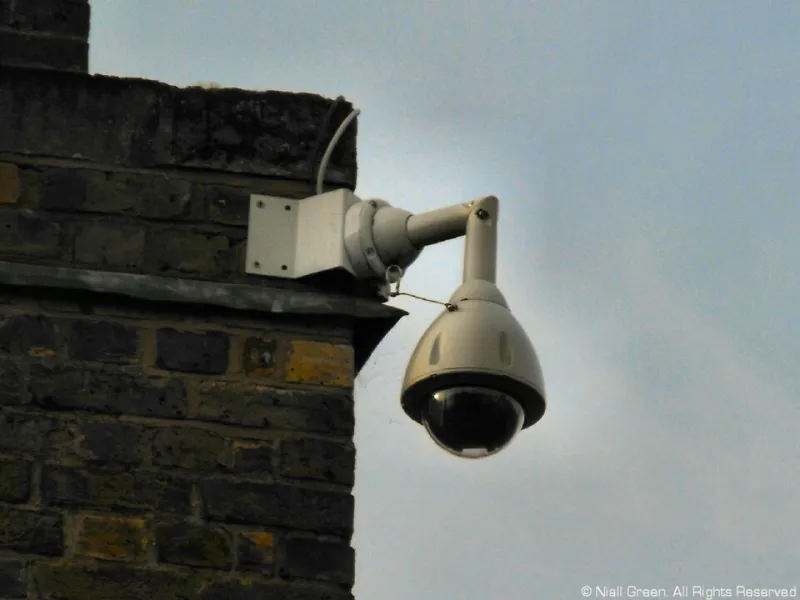
Photo: EnglishElectric at English Wikipedia, Public domain, via Wikimedia Commons
The margin is real; so is the tail
Refurbished CCTV hardware is not automatically a bad buy. For a mature model with a known firmware path, a reputable refurbisher and a clear spares route, second-user kit can be a sensible margin saver. The problem is that the saving is visible on the purchase order, while the risk sits in the tail: an unpatched camera, a licence that cannot be transferred, a PoE injector that browns out in winter, or a mixed estate that the VMS supports only on paper. Trade buyers need a checklist, not a bargain instinct.
Check firmware provenance before price
Ask for the exact model, hardware revision and current firmware version. Then verify the support status with the OEM or a UK distributor, not with a screenshot from the seller. A camera that is end-of-support may still work, but it will not receive security fixes. On a perimeter or public-facing network, that is a liability. Avoid grey imports with unsupported regional firmware. Confirm that the firmware can be updated to a supported release and that the update path is documented.
Confirm licence transfer, not just hardware
Many CCTV features are licensed: analytics, channels, edge applications, VMS connections and cloud services. A refurbished camera may arrive with the hardware but without the licence, or with a licence tied to the previous owner's account. Ask for proof of transfer or de-registration. Check whether the warranty is with the refurbisher or the OEM, and whether it is transferable to your end user. If the device was registered to a cloud portal, confirm that it has been removed.
Match PoE and power budgets
A camera that powers up on the bench may still fail on site. Check the PoE class, the inrush current, the IR or heater load and the switch budget. Refurbished units may have different firmware power profiles from new stock. If the site uses midspans or injectors, verify compatibility. A camera with a heater and IR illumination can draw more than the label suggests in cold weather. Do not assume that a working PoE port has enough headroom for a second-hand device with an unknown power history.
Test the warranty, not just the reading
A 12-month warranty is only as good as the return process. Ask how advance replacement works, who pays carriage, whether spares are held in the UK and what the turnaround is. Request a test report covering image, network, PoE, IR, tamper and audio if applicable. Check for missing accessories: glands, brackets, sunshields, terminal blocks and weatherproof caps. A cheap camera without its correct bracket can become an expensive bracket search.
Avoid a mixed OEM estate by accident
ONVIF compliance is not a guarantee of full feature support. Test the refurbished camera with the actual VMS and firmware release before committing to volume. Mixed estates increase training, spares and cybersecurity burden. A one-off model may be acceptable for a low-risk internal view, but it is rarely sensible for a critical perimeter. Keep a approved-model list and treat any exception as a design decision, not a purchasing shortcut.
Sanitise and secure before handover
Second-user devices can carry configuration, certificates, users and paired services from the previous owner. Factory reset is the minimum. Remove or replace certificates, check for hidden accounts, set unique credentials and confirm that secure boot or signed firmware is enabled where supported. If the device is being redeployed, treat it as a new network device and put it through the same hardening process as new stock. Data-bearing components should be handled under the appropriate UK data protection and disposal procedures.
A decision matrix for UK buyers
Green: current or recently supported model, documented firmware path, transferable licence, correct PoE class, UK warranty with a clear RMA process, test report and VMS compatibility confirmed. Amber: end-of-sale but still supported, limited licence transfer, non-critical internal use, or a model already present in the estate. Red: end-of-support firmware, unknown provenance, no licence, grey import, no test report, missing accessories or a critical perimeter role.
Refurbished kit is a procurement decision, not a treasure hunt. In 2026, with cybersecurity exposure and firmware support under more scrutiny than ever, the question is not whether the camera works today. It is whether it can be supported, patched and replaced on the site it is going to serve. If the answer is yes, the margin is real. If the answer is no, the saving is only a delay in the cost.