Every Camera Accounted For: A Health-Telemetry Clause Set for UK Surveillance Estates
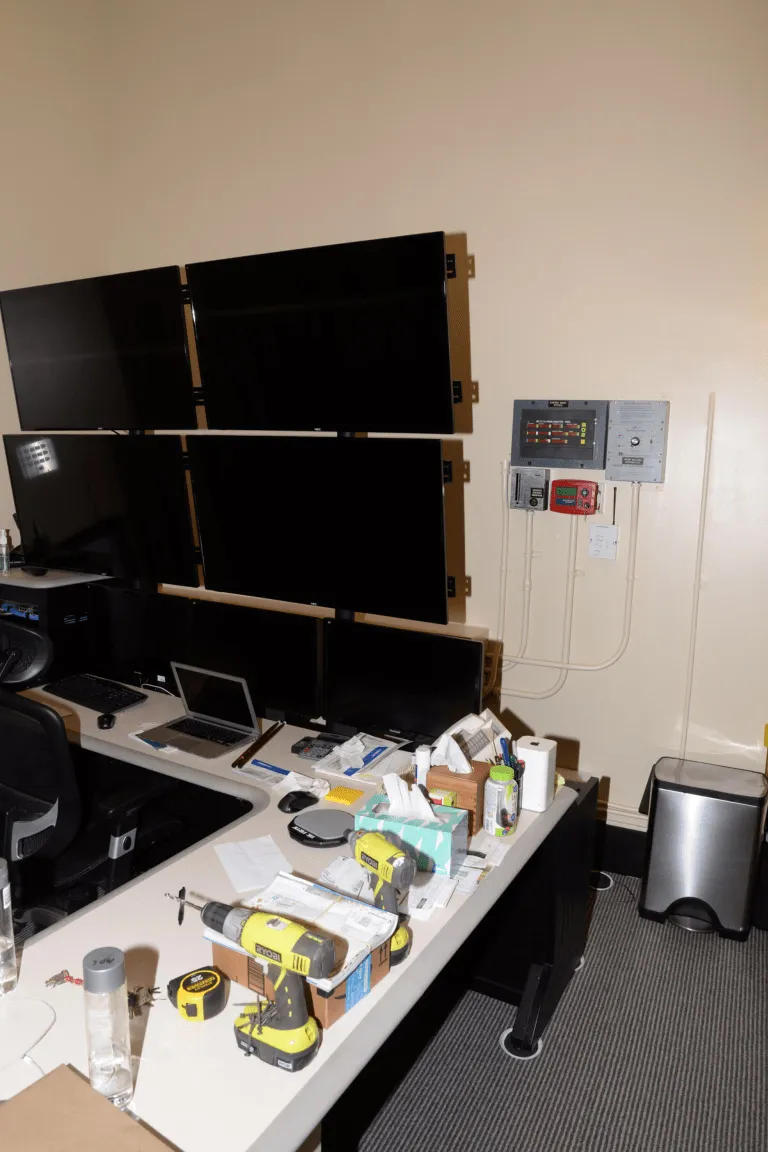
Photo: Federal Bureau of Investigation, Public domain, via Wikimedia Commons
Most UK surveillance estates are specified around recording capacity: cameras, retention days, frame rates and storage headroom. Far fewer are specified around the question that matters during an incident review: was every camera actually healthy, correctly aimed and producing usable video at the moment it was needed? In 2026, device health should be a contracted deliverable, not a diagnostic afterthought discovered when a dead lens or a drifted view undermines an evidential trail.
Start with Four Questions, Not Forty Metrics
Health telemetry can quickly become a specification of everything a manufacturer can expose. That is rarely useful to a trade buyer. A more defensible approach is to begin with four questions and then select the metrics that answer them.
First, is the device alive? Second, is it usable? Third, is the supporting chain intact? Fourth, can the supplier prove it? These four questions map to liveness, usability, integrity and evidence. They also give procurement a structure for acceptance testing, service reviews and escalation.
A camera that responds to a ping but has been knocked out of alignment is alive but not usable. A camera that streams perfectly but sits on a PoE port with no headroom is usable today but fragile tomorrow. A system that logs faults but cannot produce an auditable history is not a health regime; it is a dashboard.
Heartbeat Monitoring Is Necessary, Not Sufficient
Heartbeat monitoring is the foundation. A camera should report at a defined interval, typically every 30 to 60 seconds, with an alert raised after a small number of consecutive misses. The interval should be short enough to catch failures within an operational shift, but not so short that minor network jitter creates noise.
Specify how the heartbeat is carried. SNMP polling, ONVIF events, proprietary VMS telemetry and simple ICMP checks are not equivalent. A ping tells you that a network interface is responsive; it does not tell you that the video pipeline is running, that the encoder is producing frames, or that the lens is unobstructed. A useful specification combines at least one network-layer check with one application-layer check.
The heartbeat should also be time-stamped from a trusted source. If the estate relies on accurate time for incident reconstruction, telemetry timestamps need to be synchronised to the same discipline as the recordings themselves. Otherwise the health log becomes another source of doubt.
Usability: Blur, Tamper and Aim
Liveness metrics rarely catch the failures that matter most in practice: a lens that has drifted, a dome that has been turned, a scene that has been obscured by a new sign or a parked vehicle. These are usability failures, and they need explicit telemetry.
Blur and defocus detection should be specified with a per-camera baseline rather than a global threshold. A wide-angle overview camera and a tight ANPR camera have different acceptable sharpness profiles. The same applies to scene-change detection and tamper alerts. A system that triggers every time a cloud passes overhead will be ignored within a week.
Aim drift deserves particular attention on perimeter, forecourt and ANPR cameras. Small movements can take a plate out of the capture zone or shift a doorway out of frame. Where the camera supports it, specify a reference-image comparison or a scene-position alert. Where it does not, specify a periodic manual verification with a logged result. The point is not to pretend that every camera can self-diagnose; it is to make the check visible and auditable.
Integrity: Storage and Power Are Camera Health Too
A camera can be alive, usable and still not contributing to the record. Storage health and power health belong in the same telemetry specification.
On storage, ask for more than a percentage used. Specify checks on recording status, frame gaps, write errors, RAID or volume health, and retention against the contracted period. A camera that is streaming but not being recorded is a health failure, even if the device itself reports no fault.
On power, PoE headroom is the quiet risk. Specify per-port consumption, budget utilisation and link-error counters. A port running close to its limit may work in cool conditions and fail when the cabinet warms up or when a replacement camera draws more power than its predecessor. Telemetry should show the margin, not just the current draw.
Event Traps and the Dashboard That Earns Its Place
ONVIF event traps, SNMP traps and syslog forwarding are the practical plumbing for health telemetry. The specification should state which events are forwarded, where they are stored and how long they are retained. It should also state what happens when the event channel itself fails.
Escalation is where many health regimes collapse. A dashboard that shows every fault at the same severity trains operators to ignore it. Specify tiered escalation: immediate for loss of recording or tamper on critical cameras, next-shift for usability drift, and weekly review for trends such as rising PoE consumption or repeated link errors.
The dashboard should be exception-first. Aged faults should be visible, not buried under a wall of green tiles. For control-room environments, health telemetry should sit alongside the video wall and incident workflow, not in a separate application that nobody opens.
Service Credits Need Evidence, Not Opinion
If health telemetry is a deliverable, it should carry a remedy. Service credits tied to defined thresholds are more useful than broad commitments to “monitor the system”. The thresholds should be measurable: heartbeat loss duration, time to alert, time to restore, percentage of cameras with valid usability checks, recording gaps per month.
Telemetry logs should be retained for the service-review period and made available in a readable export. That evidence supports monthly reviews and avoids disputes about whether a fault was brief or persistent. It also gives the buyer a defensible position when an incident review exposes a camera that had been unhealthy for weeks.
A Clause Set for the Tender
A practical specification can be concise: heartbeat at 60 seconds with alert after three misses; application-layer stream check; per-camera blur and tamper baselines; aim-drift check on critical cameras; recording and storage health; PoE consumption and link errors; ONVIF or SNMP event forwarding; tiered escalation; 30-day acceptance period; service credits tied to measurable thresholds.
The wording matters less than the principle. In 2026, a UK camera estate should be able to account for every device, not merely count the ones that are recording. Health telemetry is how that account is kept.