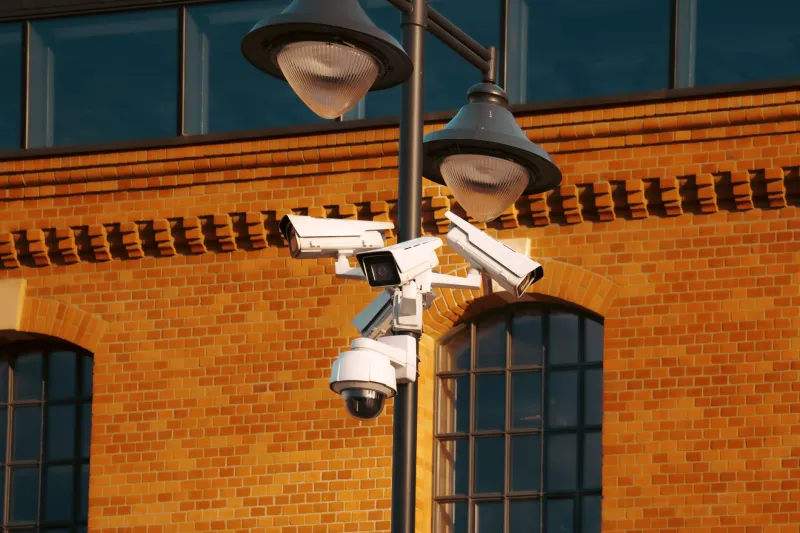
Fog, Rain and False Alarms: Choosing Thermal or IR for UK Perimeter Detection
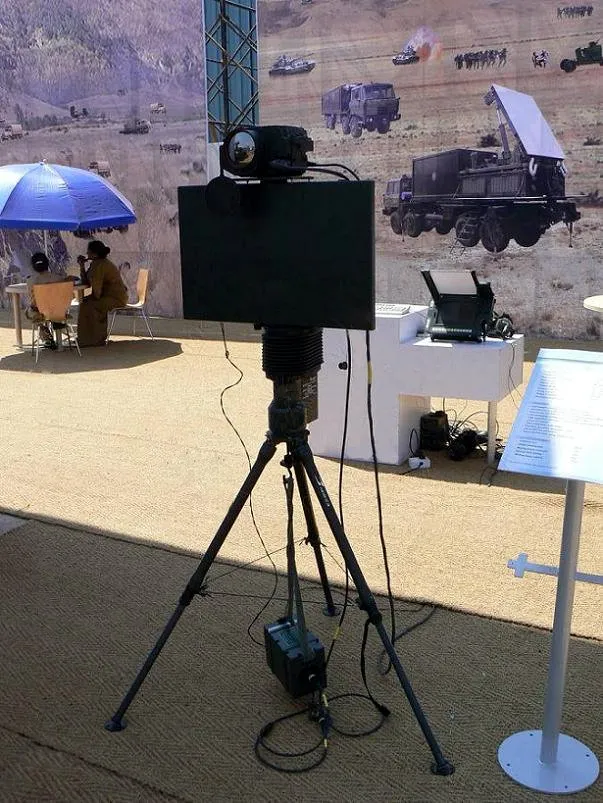
Photo: Arun Vishwakarma, Webmaster, www.Bharat-Rakshak.com (en). Uploaded by User:Sniperz11, CC BY 2.5 in, via Wikimedia Commons
Perimeter security in the UK is a test of patience. Long nights, driving rain, coastal mist and low-contrast rural backdrops can defeat a camera that looks impressive on a bright summer day. Thermal and infrared imaging are often grouped together in tender documents, yet they solve different problems. The trade buyer who understands the difference can specify a system that detects reliably, reduces nuisance alarms and gives the control room a usable picture.
Two technologies, two jobs
Infrared here means near-infrared illumination paired with a low-light sensor, or an IR-sensitive camera operating in the visible-to-NIR band. It relies on reflected light, so it needs an illuminator and a scene that returns enough energy to the lens. Thermal imaging detects long-wave infrared radiation emitted by objects. It does not need visible light or IR illumination, and it performs well when contrast in the visible spectrum is poor.
That distinction matters. IR can deliver recognisable detail, colour in low light and facial or vehicle identification at shorter ranges. Thermal is a detection and classification tool. It is excellent at finding a person or vehicle against a cooler background, but it will not read a number plate or identify a face. Specifying thermal for identification is a common and expensive error.
How UK weather changes the specification
Rain, fog and mist scatter near-infrared light, reducing IR range and producing glare from droplets close to the lens. Thermal radiation is less affected by visible-light scattering, although heavy water vapour can still attenuate it. In practice, thermal often holds detection performance better in fog and low-contrast conditions, while IR can struggle beyond its effective illumination distance.
Coastal sites bring salt and wind-driven spray. Rural sites bring dark backgrounds and moving vegetation. Urban sites bring street lighting, headlights and reflective surfaces. A perimeter specification should be based on the worst realistic condition, not the datasheet's ideal scene. For UK sites, that usually means testing in autumn and winter, not only at commissioning in spring.
Range and detection: reading the small print
Thermal datasheets often quote detection, recognition and identification distances based on Johnson criteria. These figures assume a defined temperature difference, a target size and a trained observer. Real performance depends on the thermal contrast between the target and the background, the lens focal length, the detector resolution and the mounting height. A 640 x 480 thermal sensor with a narrow lens can detect a person at several hundred metres, but recognition requires a much shorter distance and a larger number of pixels on target.
IR range is governed by illuminator power, beam angle, lens aperture and sensor sensitivity. A long-range IR illuminator may reach 100 metres or more, but the beam must be matched to the lens and the scene. Over-illumination causes bloom and washes out detail; under-illumination leaves noise. For perimeter work, the practical detection range is often shorter than the marketing figure.
Analytics performance and false-alarm economics
Analytics change the calculation. Thermal cameras often perform well with person and vehicle detection because the target stands out against the background. That can reduce false alarms from shadows, headlights and small animals, although thermal can still be triggered by hot objects, sun-baked surfaces and moving vegetation in some conditions. IR cameras depend more heavily on scene tuning, illumination consistency and the analytics engine's ability to ignore rain, insects and reflections.
False alarms have a real cost. Each one consumes operator attention, erodes trust in the system and may trigger an unnecessary response. In a control room, a perimeter zone that alarms repeatedly at night will be ignored or deselected. The cheapest camera is not the one with the lowest purchase price; it is the one that produces reliable events with minimal tuning and maintenance.
Power, bandwidth and integration
Thermal cameras are often PoE-powered, but some long-range models require more power or a heater for cold conditions. IR illuminators add another power draw and a potential point of failure. Bandwidth depends on resolution, frame rate and compression, not on the imaging technology alone. A thermal camera may use a lower resolution than a 4K visible camera, but it can still generate a steady stream that the VMS and storage must handle.
Integration is where the control room lens matters. Confirm ONVIF conformance and test the analytics events in the chosen VMS. Check whether the camera can send metadata, whether the video wall can display thermal and visible streams side by side, and whether operators can switch between detection and verification views quickly. A perimeter system is only as good as the operator's ability to verify an alarm.
A decision framework for 2026 perimeter projects
Use thermal where the primary requirement is detection at range in low contrast, fog or complete darkness, and where identification is handled by another device. Use IR where the requirement includes recognition or identification at shorter range, where some visible detail is needed, and where lighting conditions are predictable. Use both where the perimeter has mixed zones: thermal for the outer fence line, IR or visible cameras for gates, loading bays and approach routes.
Ask these questions before specifying:
- What is the detection distance in the worst seasonal condition, not the best?
- Does the analytics engine run on the camera, the NVR or the VMS, and how is it tuned?
- What is the expected false-alarm rate per zone per night, and who responds?
- Can the control room verify an alarm with a second camera or a PTZ preset?
- What power and network infrastructure does each option require?
- What is the maintenance burden for illuminators, windows and heaters?
Blending the two technologies
The strongest UK perimeter designs rarely rely on one technology. A thermal camera can detect a person at the fence line, trigger a PTZ or IR camera to a preset, and present both views to the control room. The operator verifies the event, classifies the threat and decides on a response. That workflow is more valuable than any single datasheet number.
In 2026, the trade buyer's task is to match the technology to the detection task, then prove it in the conditions that actually exist on site. Thermal and IR are complementary tools. Specified together with clear roles, they give the control room what it needs: reliable detection, usable verification and fewer wasted responses.