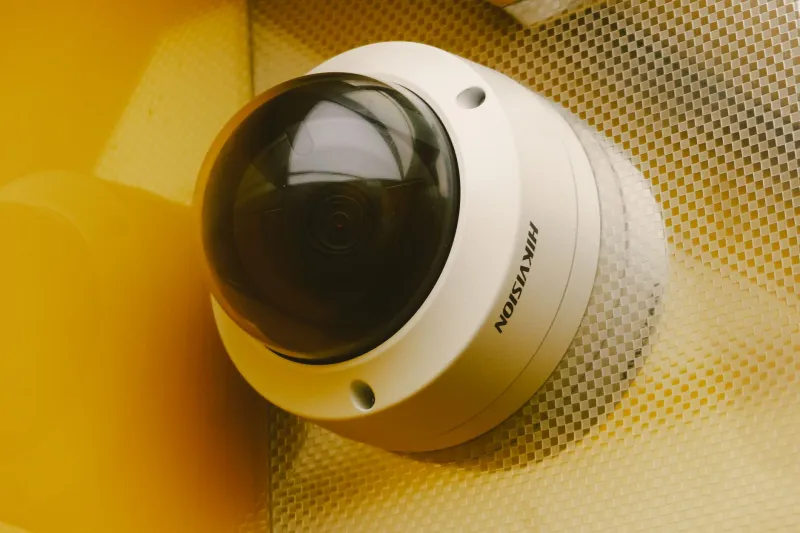
Sensing the Space: Converting Existing CCTV into Occupancy Data

Photo by Photo by Pawel Czerwinski on Unsplash on Unsplash
Most UK commercial estates already carry a dense network of cameras, recorders and network switches. The proposition now facing trade buyers is straightforward: use that existing video estate to generate occupancy counts, feed those counts into the building management system, and let heating, ventilation and lighting respond to actual use rather than to a schedule set years ago. The execution is less straightforward.
Occupancy analytics is not a licence to switch on every counting feature in the camera menu. It is a data project with a surveillance component, and it succeeds or fails on accuracy, integration and governance. For UK buyers, the commercial prize is measurable energy reduction; the risk is a pilot that produces impressive dashboards but no defensible change to plant operation.
Why occupancy data belongs in the building stack
Static time schedules are the default because they are cheap and predictable. They are also wasteful. A meeting room booked for two hours may sit empty for one of them; a warehouse aisle may be busy at 06:00 and deserted at 14:00. PIR sensors and CO2 monitoring can fill some of that gap, but they are point measurements. Cameras already cover large floor areas, are powered and networked, and are maintained under an existing service regime.
The trade buyer's question is therefore not whether cameras can count people. Many can. The question is whether the counts are accurate enough, timely enough and structured well enough for a BMS to act on without creating nuisance alarms or comfort complaints.
What the analytics measure, and what they should not
Useful occupancy analytics typically relies on object detection and tracking: line crossing at entrances, zone dwell in rooms, and density estimation in open areas. These functions should be clearly separated from biometric identification. A count of people in a zone is not a facial recognition system, and the specification should say so explicitly.
Accuracy depends on mounting height, camera angle, lens choice, lighting and occlusion. A camera specified for facial identification at a door is not automatically suitable for counting a concourse. Nor is a wide-angle dome mounted at three metres the right tool for a high-ceilinged atrium.
Accuracy in UK conditions
Vendor accuracy figures are rarely measured against UK sites in UK weather. Low winter sun, rain on dome covers, condensation, IR washout after dark and crowded retail floors all affect tracking. A camera that performs well in a dry, evenly lit laboratory may undercount in a wet car park or overcount when shadows move across a glazed façade.
The practical answer is a site-specific trial. Run the analytics against a manually verified ground truth for at least two weeks, covering weekdays, weekends and a range of weather. Report precision and recall by zone rather than a single headline percentage. For HVAC control, overcounting tends to waste energy; undercounting tends to generate comfort complaints. The error budget should reflect which failure mode the building can tolerate.
Privacy by design, not as an afterthought
Occupancy counting can be conducted without identifying individuals, but that outcome is not automatic. UK GDPR and the Data Protection Act 2018 apply, and the Information Commissioner's Office expects a documented assessment before surveillance technologies are deployed. A data protection impact assessment should cover purpose, necessity, proportionality, retention and the roles of camera owner, analytics supplier and BMS integrator.
The strongest technical safeguard is edge processing that outputs counts only. Where the analytics engine runs on the camera or on a local appliance, images need not leave the device. The BMS receives a number, not a face. Facial recognition should be disabled or absent from the specification. Signage, retention schedules and processor agreements still matter, because counting data can become personal data when combined with other building systems.
Integration: BACnet, MQTT and the event layer
Most UK BMS platforms speak BACnet/IP. Analytics platforms more often expose MQTT, REST APIs or event streams from the video management system. The gap is usually closed by a gateway or middleware layer that maps occupancy zones to BACnet objects, such as analogue input or analogue value points.
MQTT is useful for event-driven updates and for sites where the analytics platform sits outside the BMS network. BACnet remains the lingua franca of plant control. Whichever route is chosen, the design should include time synchronisation, message quality-of-service, network segregation and a fail-safe behaviour. If the analytics feed drops, the BMS should revert to a schedule rather than to a default that leaves plant running or occupied spaces cold.
A pilot checklist for trade buyers
- Define the use case and the key performance indicator before selecting hardware. A realistic target might be a percentage reduction in gas or electricity consumption in a defined zone, not a generic claim about smart buildings.
- Choose two or three representative zones with different ceiling heights, occupancy patterns and camera models.
- Verify camera suitability for counting, not just for security coverage.
- Record a baseline of energy use and occupancy before the analytics are enabled.
- Obtain data protection sign-off and confirm that only count data leaves the edge device.
- Test the integration end to end, including what happens when the analytics feed fails.
- Measure over eight to twelve weeks, including at least one cold snap and one mild spell.
- Document the handover: zone mapping, BACnet point list, retention policy and escalation route.
The commercial case
Where cameras, network and recording already exist, the incremental capital cost is often modest: analytics licences, integration work and commissioning time. The savings come from set-back and set-forward of HVAC plant, reduced lighting hours and better use of meeting rooms. Those savings are real but gradual, and they depend on the BMS being tuned to respond to them.
In 2026, the UK heating season gives buyers a natural pilot window. A disciplined trial over the winter months will show whether the existing estate can produce data good enough to trust. If it cannot, the answer is not more cameras by default; it is a narrower scope, a better mounting position or a different sensing technology. The objective is not surveillance for its own sake, but a building that responds to the people actually inside it.