The Three O'Clock Problem: WDR and Glare Control at UK Retail Entrances
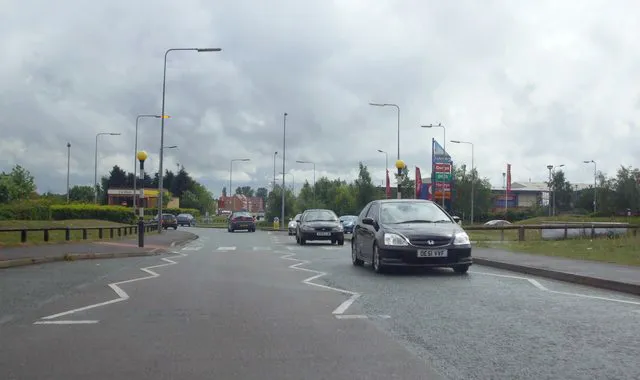
Photo: Glyn Drury, CC BY-SA 2.0, via Wikimedia Commons
At a UK retail entrance, the most demanding lighting condition is rarely midnight. It is a bright, low afternoon sun reflecting off wet tarmac while a customer steps from a dark shop interior into the doorway. The camera must retain facial detail in the shadowed face, hold usable colour on the forecourt and avoid triggering people-counting or loitering analytics on reflections. A high megapixel count does nothing to solve that problem on its own. For trade buyers, the entrance camera is a lighting instrument as much as an imaging device, and it should be specified accordingly.
Why the entrance is the hardest camera on site
Retail entrances combine several difficult variables at once. The subject is often backlit by daylight, while the interior behind them may be deliberately darker. Automatic doors create moving reflections. Wet tarmac, painted kerbs and glazed shopfronts add specular highlights that change from minute to minute. In November and December, the sun sits low for much of the working day, so the problem persists long enough to affect recorded evidence and live monitoring, not just a brief flare at sunrise.
This matters for analytics as well as images. A camera that appears acceptable on a monitor may still produce clipped faces, lost colour and false object detections when the sun undercuts the scene. If the site relies on entrance counting, queue measurement or intrusion detection after hours, glare becomes an operational fault rather than a cosmetic one.
Separating true WDR from marketing language
Wide dynamic range is often quoted as a single decibel figure, but the figure alone is not a specification. Trade buyers should ask how the camera achieves its range. Multi-exposure WDR combines frames at different shutter speeds, which can work well for static or slow-moving subjects but may introduce ghosting around people. Sensor-level dynamic range depends on pixel design and readout. Tone mapping then decides how the captured range is presented, and aggressive tone mapping can flatten contrast until faces become difficult to identify.
A practical comparison should use the same scene, lens and compression settings across candidate cameras. Ask for recorded footage, not only a live demo, and review it at normal playback speed as well as frame by frame. Check whether facial features remain usable when the background is bright, whether colour survives in shadow, and whether noise reduction has smeared detail. A credible supplier should be willing to provide sample clips from a comparable entrance, ideally shot in low winter sun rather than a controlled showroom.
Reproducing the problem before purchase
Site testing is more valuable than catalogue reading. Arrange a trial for early afternoon between November and January, when the sun angle is most likely to expose weaknesses. Position a volunteer at the entrance and ask them to walk in and out at normal speed. Test with the doors open and closed, and with the forecourt surface both dry and damp if it can be done safely. Record the live view and the playback, then review the analytics event log for the same period.
A useful test should include a dark jacket or hat, because dark clothing against a bright background is a common failure point. It should also include a reflective surface such as a wet kerb or a parked vehicle. If the camera cannot hold both the face and the background without manual intervention, that is a specification issue, not a commissioning inconvenience. Keep the test clips as part of the project evidence so that acceptance is based on observed performance rather than a datasheet claim.
Physical measures: hoods, housings and mounting geometry
Camera position can remove more glare than any menu setting. Where possible, avoid aiming the lens directly east or west along the entrance approach during the low-sun months. A slight offset in mounting angle may keep the sun outside the field of view for longer. A deep sunshield or lens hood helps control stray light, but it must not intrude into the image or trap heat. On exposed retail park facades, a correctly sized housing with a generous hood is often more effective than a compact dome that offers little shielding.
Domes have their place, but they are more prone to flare and reflection from sunlight and from interior lighting. At an entrance where evidence quality matters, a bullet or turret camera with a well-matched hood may be easier to control. Check that the housing finish and fixings suit the location, and that the mount does not allow the camera to drift out of alignment. The physical installation should be commissioned with the sun path in mind, not simply centred on the doorway.
Exposure settings that keep analytics honest
Default exposure settings are rarely optimised for a UK retail entrance in winter. Use separate day and night profiles, and set the WDR level deliberately rather than leaving it at maximum. Excessive WDR can raise shadow noise and soften moving subjects. Shutter limits should be chosen to balance motion blur against noise, particularly where faces must be identifiable at walking pace. Anti-flicker settings should match the local lighting, and backlight compensation should be used sparingly because it can over-brighten the background.
Analytics need their own review. Mask known glare zones such as wet kerbs or reflective signage, and tune detection sensitivity for the entrance rather than the whole car park. Where the camera supports it, schedule different rules for trading hours and closed hours. Revisit the settings after the first sustained period of low sun, because a configuration that works in October may not hold in December.
A trade checklist for acceptance and handover
Before signing off an entrance camera, confirm that recorded footage from a low-sun afternoon shows usable facial detail against a bright background. Verify that colour is retained in shadow and that noise reduction has not removed distinguishing features. Check that analytics events correspond to real people and vehicles rather than reflections. Confirm that the sunshield or housing does not cause vignetting, and that the camera cannot be easily moved out of alignment. Record the final exposure and analytics profiles, and include the test clips in the handover pack.
The objective is not a camera that looks impressive in a demonstration room. It is one that remains dependable when the sun is low, the tarmac is wet and the entrance is busy. Specifying WDR and glare control as measurable site requirements is the most reliable way to achieve that in UK retail conditions in 2026.