The Microphone Is a Legal Instrument: Specifying Two-Way Audio on UK CCTV Estates
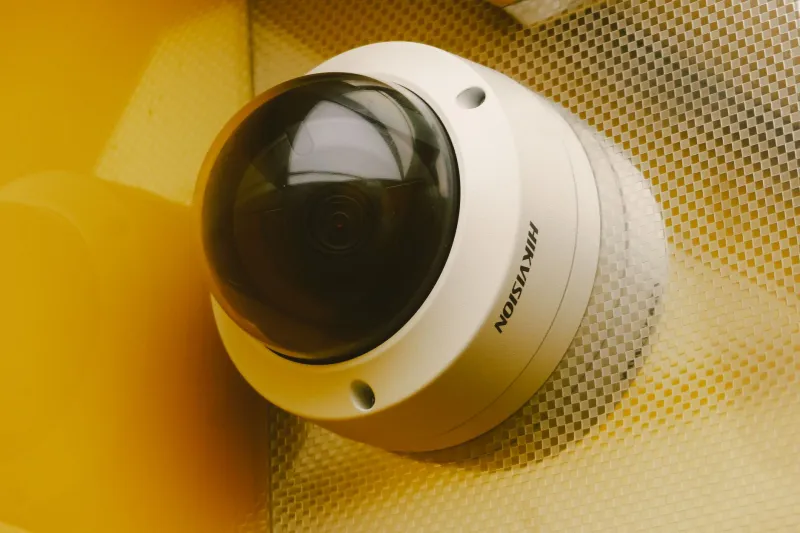
Audio has arrived on UK sites almost by default. A camera specified for a loading bay or a communal entrance now frequently ships with a microphone and speaker in the box, and the integrator who leaves the audio channel disabled is making an active decision rather than following the path of least resistance. That is worth pausing on, because the purchase order rarely says so.
Visual surveillance records what a person did. Audio records what they said. The two carry different evidential weight, different expectations from the people being recorded, and — in a UK context — a materially different compliance burden. The purpose of this article is not to talk buyers out of audio. Used well, it is genuinely useful for door control, for challenge-and-reassure at a remote gate, and for incident response where a control room operator needs to establish intent without dispatching a response team. The task is to specify it so it does the job without dragging a second, unplanned data processing activity along behind it.
Why audio changes the risk profile
A camera covering a shop doorway sees perhaps thirty people in an hour, each of them for two or three seconds. A microphone in the same housing hears fragments of every conversation within range — including the conversations of people who are not the subject of any surveillance interest, who have not approached the door, and who may be standing on the public pavement outside the site boundary.
The Information Commissioner's Office has long taken the position that audio recording should only be considered where there is a genuine and documented justification, and that where it is used it must be notified and proportionate. Practitioners sometimes paraphrase this as a discouragement; the more accurate reading is that it is a demand for reasoning. If the audio channel exists because it came free with the camera, that reasoning does not exist, and the system is carrying risk for no operational return.
There is a second dimension. Voice is not merely personal data; in some circumstances, and particularly where voice is processed for identification, it may engage the special category provisions that apply to biometric data. An estate that never intended to run voice recognition can still find itself in difficult territory if recorded audio is analysed, indexed or matched without a documented basis.
Microphone selection: pattern before sensitivity
Product literature leads with pickup range in metres, usually measured under conditions no real site resembles. Buyers should ask for the pattern first. An omnidirectional capsule hears the queue, the adjacent bus stop and the road; a cardioid or super-cardioid element, or a MEMS array with beamforming, can be aimed at the door mat and will reject a useful proportion of what lies beyond it.
A workable specification will state the polar pattern, the nominal usable range at a defined sound pressure level, the off-axis rejection in decibels, the self-noise figure and — critically — whether automatic gain control and a noise gate are configurable rather than fixed. On a covered arcade with hard surfaces, reverberation will halve the practical range compared with the datasheet, and an AGC left at factory default will lift the gain during quiet periods and pull in precisely the background chatter the design was meant to exclude.
Noise gating deserves particular attention. A gate that opens at a low threshold is effectively an always-on microphone. Setting the threshold so that the channel only carries speech at conversational level from a defined zone — the door mat, the intercom post, the barrier — is one of the cheapest and most effective proportionate controls available, and it should be commissioned on site rather than left to the installer's judgement on the day.
Speakers, echo and intelligibility
Two-way audio fails in the field more often through acoustics than through electronics. If the microphone and speaker sit in the same enclosure, the system needs hardware acoustic echo cancellation, not a software afterthought. A half-duplex arrangement — the operator speaks, then listens — is often more robust than full duplex on a site with reflective surfaces, and it matches how control room staff actually work during an incident.
Specify the speaker's output at one metre, its ingress protection rating, and its vandal resistance where it is publicly accessible. Intelligibility matters more than volume: a speaker that is loud but unintelligible at the gate produces an operator repeating themselves and a member of the public walking away. Where the site is exposed, wind noise at the microphone will dominate unless a windshield or a recessed mounting is part of the design.
Latency is the other quiet failure. An operator who hears their own voice returned a second later will stop using the function. Test the round trip on the actual network path, not on a bench.
Drawing the boundary
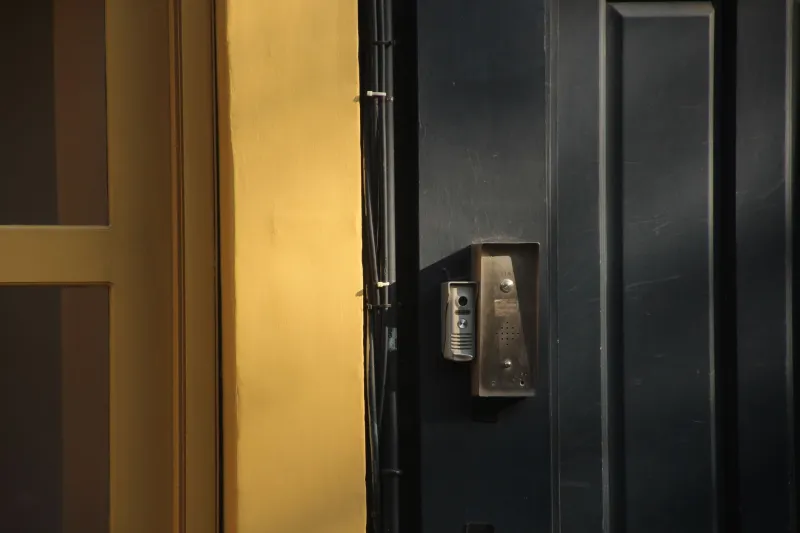
The most useful design decision on most UK sites is to tie audio to an event rather than to a camera. A door station where the microphone and speaker only become active when a visitor presses the call button is a proportionate, defensible design: the person has initiated the interaction, expects to be heard, and the capture window is short. The same function on a fixed dome overlooking a car park, running continuously, is a different proposition entirely.
Where continuous audio is genuinely required — a lone-worker protection point, a cash office, a confined plant room — the case should be written down, the zone physically constrained, and the audio channel treated as a separate processing activity with its own retention period and access list. Neighbouring gardens, party walls and adopted highways are the boundaries that matter most, because audio does not respect a fence line and a complaint from a neighbour is the most common route by which an audio installation comes to official attention.
Where the site is in Wales, signage should be bilingual. Across the UK, layered notification works best: a pictogram and short statement at the point of approach, before capture begins, with a route to the fuller privacy information for anyone who wants it.
Retention, access and evidential handling
Treat the audio stream as its own asset. Export it as a separate channel where the recorder supports it, apply a shorter retention period than the video — seven to fourteen days is common where the operational need is door control rather than evidential — and restrict playback to named roles with an audit trail covering every review and export.
For evidential use, the export should carry a hash and a record of the exporting operator, and the transcript, where one is produced, should be marked as a derived document rather than evidence in itself. Subject access requests that touch audio will require redaction of third-party voices, which is far easier on a system that separated the audio channel from the outset than on one that did not.
A procurement checklist
- State the operational purpose of audio in the specification, in one sentence, and delete any camera whose audio is not required for it.
- Require polar pattern, off-axis rejection, self-noise and configurable gating in the technical submittal.
- Insist on hardware echo cancellation and tested round-trip latency below the threshold at which operators disengage.
- Default to event-triggered audio on door stations rather than continuous capture.
- Confirm signage position, wording and language coverage before first fix, not at handover.
- Set a separate retention period and access role for audio, evidenced in the handover pack.
- Record the commissioning settings — gate threshold, gain, speaker level — so that a firmware reset does not silently undo them.
The microphone is not an accessory to a camera. On a UK site it is a separate instrument with its own justification, its own boundaries and its own audit requirements. Specifying it that way costs very little at design stage and saves a considerable amount of explanation later.